Saudi Arabia’s population is growing steadily as the country continues to expand its economy, infrastructure, tourism, and business sectors under Vision 2030.
In 2026, the Kingdom remains one of the most important countries in the Middle East, attracting people from around the world for employment, investment, education, and better opportunities.
The rapid development of cities such as Riyadh, Jeddah, and Dammam, along with major government projects, has played a major role in shaping the country’s population growth and demographic trends.
Understanding KSA population statistics helps provide valuable insights into the country’s workforce, urban development, consumer market, and future economic growth.
In this article, we will explore the latest Saudi Arabia population statistics for 2026, including total population, growth rate, demographics, urbanization, expatriate population, and other key trends shaping the Kingdom.
Saudi Population 2026 – Key Statistics
As of May 2026, Saudi Arabia’s population is 37.59 million, based on data collected by the GMI team. This number reflects the total number of people currently living in the country, including both Saudi citizens and expatriates
The population density of Saudi Arabia in 2026 is 16.10 people per square kilometer.
The male population in Saudi Arabia 2026 is 22.67 Million
The female population in Saudi Arabia 2026 is 14.92 Million
The urban population in Saudi Arabia 2026 is 32.10 Million
The median age in 2026 is approximately 29.7 years.
Riyadh is the most populated city in Saudi Arabia with 9.06 million people
Islam is the most practised religion in Saudi Arabia with 34.96 million followers
Saudi Arabia Population – An Overview
According to the 2022 census, Saudi Arabia’s population stood at 32.12 million.
As of May 2026, the population has increased to approximately 37.59 million, reflecting steady growth over the past few years.
In 2026, the country has a population density of around 16.10 people per square kilometer.
The median age is estimated at 29.7 years, showing that a large portion of the population falls within the young and working-age category.
Saudi Arabia – Country in a nutshell
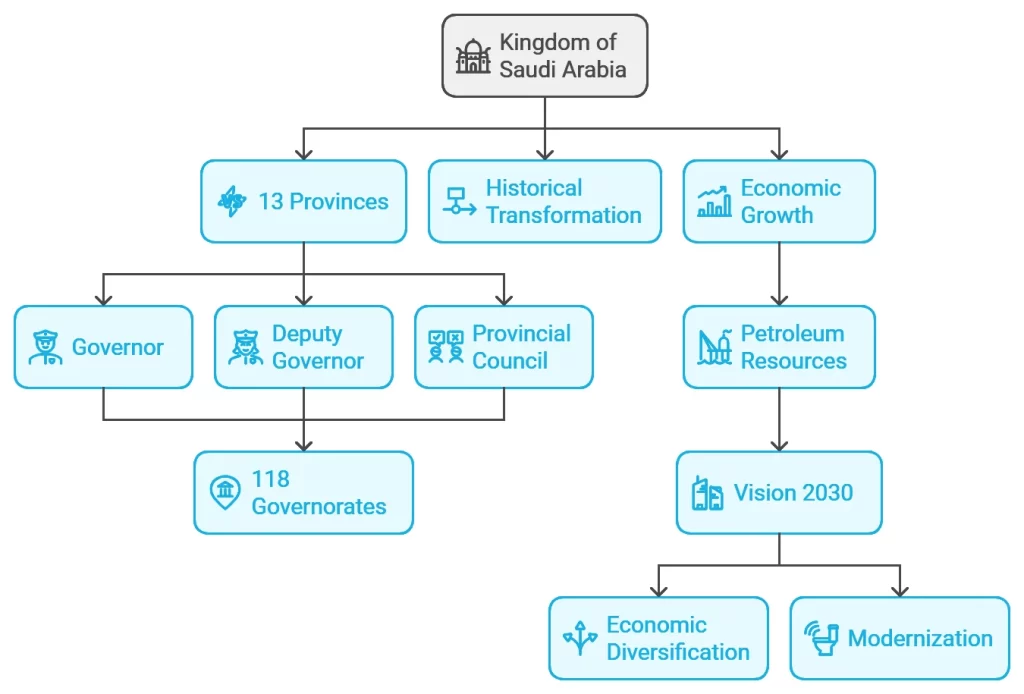
Saudi Arabia is a nation where ancient heritage seamlessly meets a hyper-modern future. Spanning the majority of the Arabian Peninsula, it serves as the spiritual heart of the Islamic world, stewarding the Holy Cities of Makkah and Madinah. Administratively, the Kingdom is organized into 13 distinct provinces, a structure that allows for localized governance across its diverse geography—from the mist-covered mountains of Asir to the sprawling urban landscapes of the Nejd.
While the discovery of oil in the 1930s provided the initial catalyst for its global economic standing, the Saudi Arabia of 2026 is defined by a bold departure from carbon-dependency. Under the ambitious Vision 2030 framework, the nation has reimagined itself as a global investment powerhouse and a crossroads connecting three continents.
This transformation is visible in the rapid expansion of its digital economy and a booming tourism sector that invites the world to explore its UNESCO World Heritage sites. This openness has cultivated a cosmopolitan atmosphere, attracting a highly skilled international workforce that lives and works alongside a young, tech-savvy Saudi generation, together driving one of the world’s most significant social and economic evolutions.
Saudi Arabia Population Statistics 2026 [Infographics]

Saudi Arabia’s Demographics in 2026
Saudi Arabia is home to a diverse and growing population.
The next sections explore key demographic factors shaping the country.
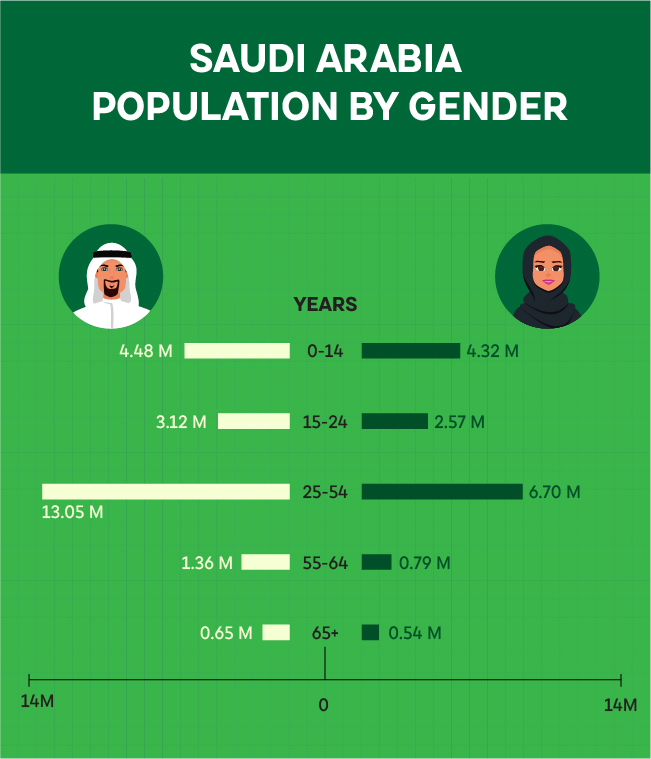
Gender Distribution
Gender | Population | Population (%) |
Male | 22.67 Million | 60.32% |
Female | 14.92 Million | 39.68% |
Saudi Arabia’s population remains male-dominated, with 60.32% men (22.67 million) and 39.68% women (14.92 million).
This trend has historically been shaped by the large number of male expatriates working in industrial and construction sectors.
However, recent data from the General Authority for Statistics (GASTAT) shows that the landscape is evolving rapidly.
As of early 2026, the Saudi female labor force participation rate has reached a historic 36.2%, significantly ahead of initial Vision 2030 targets.
This economic shift is a primary driver in balancing the country’s demographic profile.
Additionally, the expansion of the Saudi Premium Residency program in 2025 has encouraged high-skilled expatriates to relocate with their families, which has helped in bringing a balance in the gender ratio and is helping to create a more stable and permanent community of innovators.
These efforts are steadily shifting the gender balance and contributing to the Kingdom’s broader modernization goals.
As more women enter the workforce and leadership roles, these changes continue to have a significant impact on society and the economy.
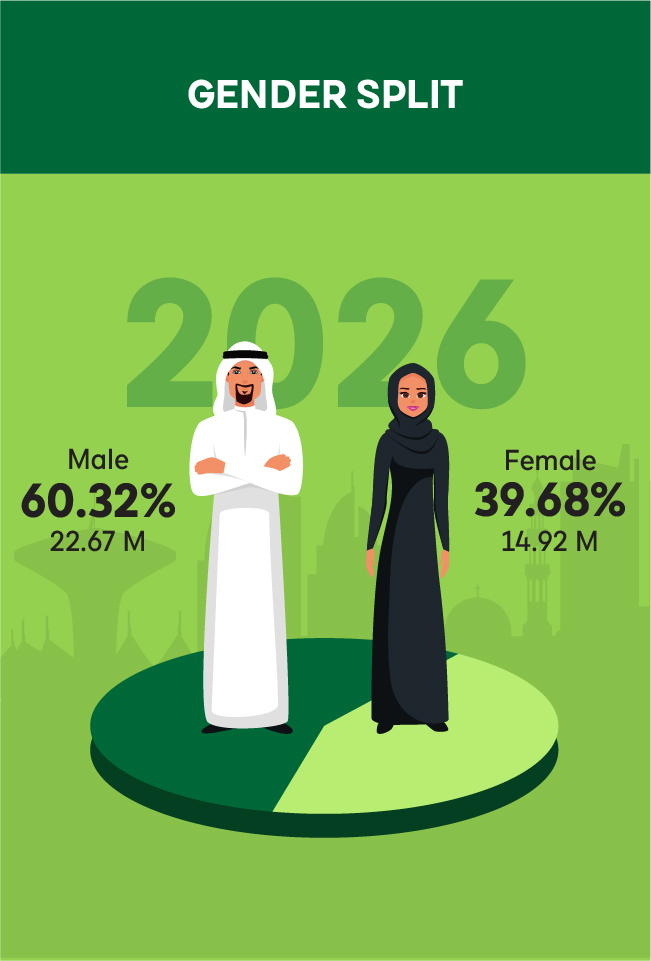
Saudi Arabia Population by Age (2026)
Age Group | Population | Population (%) |
0-14 years | 8.81 Million | 23.43% |
15-24 years | 5.69 Million | 15.14% |
25-54 years | 19.75 Million | 52.54% |
55-64 years | 2.15 Million | 5.72% |
65 years and above | 1.19 Million | 3.17% |
Saudi Arabia continues to benefit from a “demographic dividend,” with a structure that supports both current productivity and future growth.
The next sections break down the population by age group based on the latest 2026 figures.
✨ The largest age group is 25-54 years, making up 52.54% (19.75 million people). This represents the core of the nation’s workforce. Research into the 2025/2026 labor market shows that this group is the primary driver of the non-oil private sector growth, fueled by the rapid “Saudization” of high-skill industries.
👶 The second-largest group is children (0-14 years) at 23.43% (8.81 million children). Recent GASTAT reports on “Child Well-being (2025)” highlight that over 82% of children in this bracket are now developmentally on track, supported by massive government investments in early childhood education and healthcare.
🧑🎓 Young adults (15-24 years) make up 15.14% (5.69 million people). This “Generation 2030” is the most educated in the Kingdom’s history. With university enrollment at an all-time high, this group represents a tech-savvy future workforce that is already beginning to fill roles in emerging sectors like renewable energy and digital entertainment.
🔴 The population declines significantly in older age groups, though life expectancy is rising due to healthcare reforms.
- Ages 55-64 account for 5.72% (2.15 million people).
- Seniors (65+ years) make up 3.17% (1.19 million people).
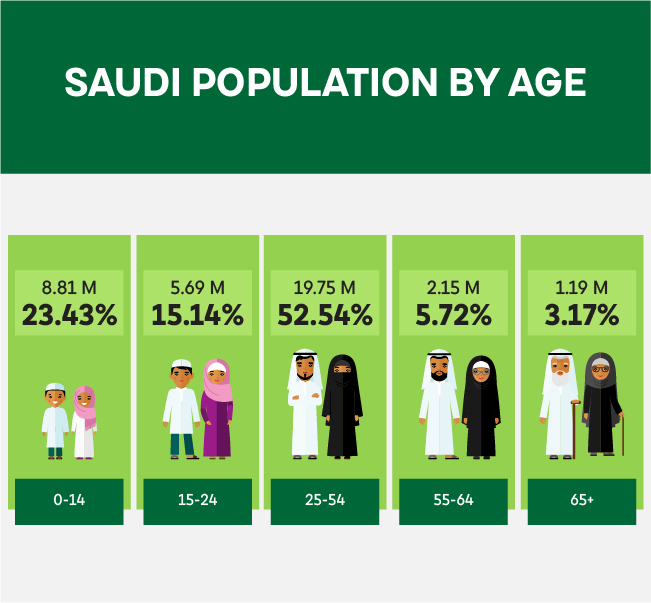
Saudi Arabia’s Population by Gender (2026)
Age Group | Men | Women |
0-14 years | 4.48 Million | 4.32 Million |
15-24 years | 3.12 Million | 2.57 Million |
25-54 years | 13.05 Million | 6.70 Million |
55-64 years | 1.36 Million | 0.79 Million |
65 years and above | 0.65 Million | 0.54 Million |
The following sections provide a detailed look at how the Saudi population is distributed across different age groups and genders.
✨The Working Core (25-54 Years)
The 25-54 age group has the highest population, with 13.05 million men and 6.70 million women. This indicates a massive and productive working-age population. The higher number of men is largely attributed to the continued recruitment of specialized expatriate professionals to support the Kingdom’s large-scale infrastructure and industrial projects.
👶 The Next Generation (0-14 Years)
Among children, the numbers are remarkably balanced, with 4.48 million boys and 4.32 million girls. This near-equal distribution suggests a stable and healthy birth rate across genders, supported by high standards of modern neonatal care throughout the country.
🧑🎓Young Adults (15-24 Years)
In the 15-24 age group, there are 3.12 million men and 2.57 million women. While a gap exists, it is narrowing as educational opportunities expand. Interestingly, recent education trends show that women in the Kingdom are enrolling in STEM fields (Science, Technology, Engineering, and Mathematics) at rates that often exceed those in Western nations, preparing a highly skilled generation of female professionals.
🔴The Transition Years (55-64 Years)
The 55-64 age group sees a noticeable decline in population, with 1.36 million men and 0.79 million women. The gender gap remains evident here, reflecting historical labor trends from previous decades, though both figures are decreasing as this demographic prepares for retirement.
💔Seniors (65+ Years)
The 65+ age group has the lowest population, with 0.65 million men and 0.54 million women. Although the male count is currently higher, the narrowing gap in this bracket suggests an increase in female longevity. With female life expectancy in the Kingdom now trending higher than that of men, the senior demographic is expected to become more balanced in the coming years.
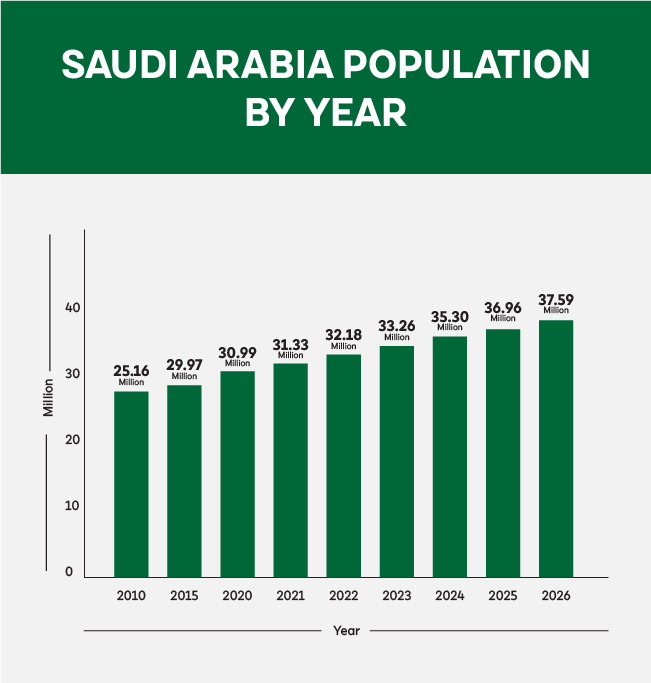
Saudi Arabia’s Population by Year (2010 – 2026)
Year | Population |
| 2026 | 37.59 Million |
| 2025 | 36.96 Million |
| 2024 | 35.30 Million |
| 2023 | 33.26 Million |
| 2022 | 32.18 Million |
| 2021 | 31.33 Million |
| 2020 | 30.99 Million |
| 2015 | 29.97 Million |
| 2010 | 25.16 Million |
The demographic landscape of Saudi Arabia has undergone a significant shift, moving from the steady growth of the previous decade into a period of rapid, strategic expansion. As of 2026, the total population has reached 37.59 million.
Recent Growth Analysis
The most striking period of growth occurred between 2023 and 2025, where the population increased by 3.7 million in just two years. This surge marks a transition in the Kingdom’s history, where the country added over 6.6 million people since 2020. This trend reflects Saudi Arabia’s increasing appeal as a global economic destination and its ongoing efforts to diversify its national workforce.
Historical Context vs. Modern Shifts
To understand where the Kingdom is today, it is helpful to look at the long-term trajectory:
A Decade of Change: Since 2015, when the population stood at 29.97 million, the number of residents has grown by 7.62 million.
- The 20th Century Foundation: Historically, growth was primarily driven by high birth rates and a sharp decline in death rates as healthcare and public services modernized.
- The 2026 Perspective: Today, while life expectancy and healthcare continue to improve, the primary engine of growth has shifted toward international migration and the expansion of the non-oil economy.
Current projections suggest that after this period of accelerated growth, the population pace will likely begin to stabilize. The focus is moving toward a more sustainable growth model that balances the needs of a largely urban population with the Kingdom’s goal of becoming a premier international hub for tourism, commerce, and innovation
Saudi Population by Nationality
Nationality | Percentage | Population |
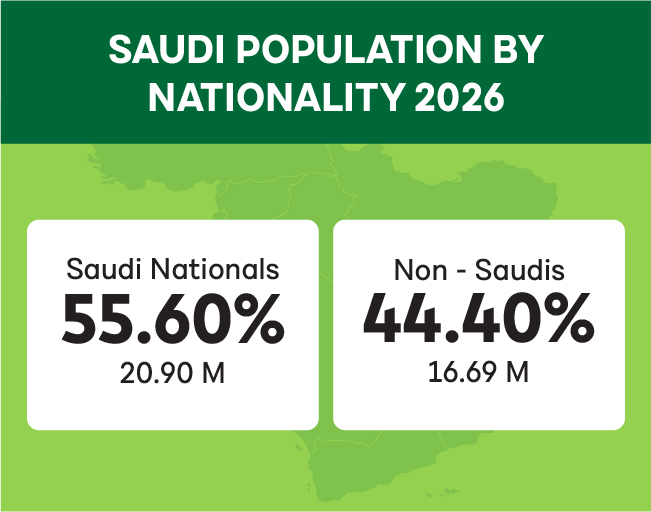
Saudi Nationals | 55.60% | 20.90 Million |
Non-Saudis | 44.40% | 16.69 Million |
Saudi Arabia’s population structure is defined by a unique synergy between its native population and a vast international community. This 2026 data reflects a nation that is successfully balancing national identity with global integration.
The National Foundation
Saudi nationals currently represent 55.60% of the population, totaling 20.90 million people. While historically concentrated in the public sector, this demographic is undergoing a major professional shift. We are seeing a new generation of Saudi citizens moving aggressively into entrepreneurship and specialized private-sector roles. This transition is a direct result of long-term investments in local talent, ensuring that the “engine” of the country’s economy is increasingly driven by its own citizens.
The Global Talent Pool
Non-Saudis make up the remaining 44.40%, accounting for 16.69 million residents. This is more than just a labor force; it is a diverse community of professionals and their families who provide the specialized expertise required for the Kingdom’s rapid modernization. From the architects of new urban landscapes to the healthcare workers and IT specialists powering the digital economy, this international segment remains vital to the country’s momentum.
Strategic Workforce Balance
The relationship between these two groups is governed by a strategic focus on Saudization (Nitaqat). Rather than simply replacing foreign talent, the goal in 2026 has shifted toward “knowledge transfer.” By integrating the technical skills of the expatriate community with the growing ambitions of the local workforce, Saudi Arabia is building a resilient, diverse, and highly competitive global economic hub.
Non-Saudi Population by Nationality 2026
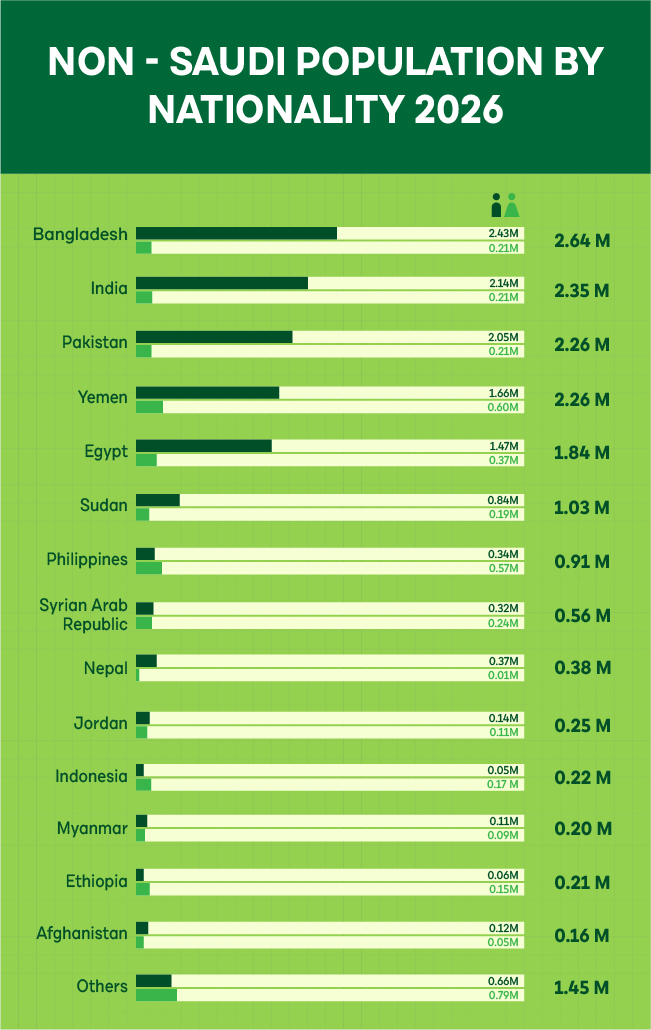
Nationality | Male Population (In Million) | Female Population (In Million) | Total Population (In Million) |
|---|---|---|---|
Bangladesh | 2.43 | 0.21 | 2.64 |
India | 2.14 | 0.21 | 2.35 |
Pakistan | 2.05 | 0.21 | 2.26 |
Yemen | 1.66 | 0.60 | 2.26 |
Egypt | 1.47 | 0.37 | 1.84 |
Sudan | 0.84 | 0.19 | 1.03 |
Philippines | 0.34 | 0.57 | 0.91 |
Syrian Arab Republic | 0.32 | 0.24 | 0.56 |
Nepal | 0.37 | 0.01 | 0.38 |
Jordan | 0.14 | 0.11 | 0.25 |
Indonesia | 0.05 | 0.17 | 0.22 |
Myanmar | 0.11 | 0.09 | 0.20 |
Ethiopia | 0.06 | 0.15 | 0.21 |
Afghanistan | 0.12 | 0.05 | 0.16 |
Others | 0.66 | 0.79 | 1.45 |
The GMI Team has analyzed the expatriate population in Saudi Arabia, revealing a diverse workforce that is increasingly evolving from temporary labor to long-term residency.
✔ Bangladesh (2.64 million): Saudi Arabia remains the top destination for Bangladeshi workers. A landmark 2025 manpower agreement—the first in 50 years of diplomatic relations—has streamlined recruitment, leading to a record influx of over 750,000 new workers in a single year to support the Kingdom’s rising infrastructure demands.
✔ India (2.35 million): Dominated by 2.14 million men, the Indian community is shifting toward high-tech and specialized engineering roles. As Saudi Arabia builds its domestic tech hubs, Indian professionals in IT and healthcare are becoming central to the non-oil economy.
✔ Pakistan & Yemen (2.26 million each): While Pakistanis drive the logistics and transport sectors, the Yemeni population is unique for its high family presence (0.60 million women). Unlike many other expat groups, many Yemenis are long-term residents who have integrated into the Kingdom’s local retail and trade fabric.
✔ Egypt (1.84 million) & Sudan (1.03 million): Egypt remains the primary source for the Kingdom’s “knowledge economy,” providing teachers and medical staff. Interestingly, the Sudanese population has surpassed 1 million in 2026, largely due to Saudi Arabia’s role as a regional humanitarian hub, welcoming those displaced by the ongoing conflict in Sudan.
✔ The Philippines (0.91 million): This is the only major nationality where women outnumber men (0.57 million to 0.34 million). This trend is accelerating as the Saudi healthcare market is projected to reach $152 billion in 2026, creating an unprecedented demand for Filipino nurses and specialized medical technicians.
✔ Emerging Communities: Groups from Syria (0.56M), Nepal (0.38M), and Jordan (0.25M) continue to fill essential roles. Meanwhile, communities from Indonesia (0.22M) and Ethiopia (0.21M) are seeing a rise in female residents as new labor laws enhance protections for domestic and hospitality workers.
This data highlights Saudi Arabia’s evolution into a sophisticated global employment hub. It is no longer just attracting Asian labor; it is becoming a center for Middle Eastern professionals and a sanctuary for regional neighbors, reinforcing its crucial role in the global economic and humanitarian landscape.
Saudi Arabia Birth Rate, Death Rate & Immigration Rate 2026
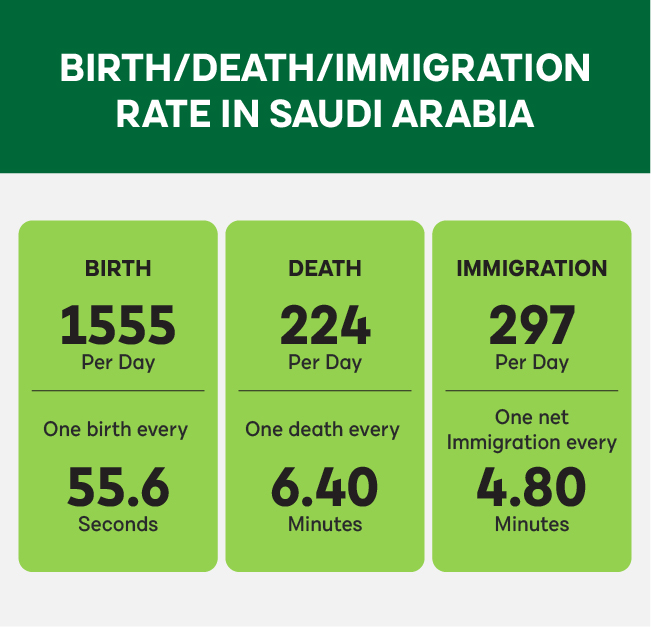
Births | 1555/Day | 55.6 Seconds |
Deaths | 224/Day | 6.40 Minutes |
Immigrations | 297/Day | 4.80 Minutes |
Saudi Arabia’s daily demographic rhythm in 2026 is defined by a consistent rise in births and a strategic influx of new residents. On average, the Kingdom records 1,555 births every day (one every 55.6 seconds), a steady growth supported by a world-class healthcare system where 99.6% of births are now attended by skilled medical professionals. This high standard of maternal care, coupled with the Health Sector Transformation Program, has pushed the national life expectancy to a milestone 79.9 years—a significant leap that has kept the daily death rate stable at 224 (one every 6.40 minutes)
Beyond natural growth, the Kingdom remains a powerful magnet for global expertise, welcoming 297 immigrants daily (one every 4.80 minutes). These arrivals are increasingly composed of specialized professionals drawn to the country’s expanding non-oil economy and modern urban centers. Together, these factors create a resilient population model that balances a vibrant, youthful birth rate with a strategic gain in international talent and a dramatic increase in long-term health and longevity.
Population in Main Cities of Saudi Arabia 2026
City | Population |
Riyadh | 9.06 Million |
Jeddah | 5.71 Million |
Mecca | 2.52 Million |
Medina | 1.85 Million |
Ad-Dammam | 1.57 Million |
Taif | 0.82 Million |
Tabuk | 0.80 Million |
Saudi Arabia’s urban centers are undergoing a massive transformation, driven by the Kingdom’s Vision 2030 initiatives and the relocation of global corporate headquarters to its major hubs.
Riyadh (9.06 Million): As the capital and administrative heart of the Kingdom, Riyadh’s jump to over 9 million residents is fueled by the “Regional Headquarters” program, which has seen over 400 global companies move their Middle East bases to the city. This growth is supported by the near-completion of the King Abdullah Financial District and the rapid expansion of the Riyadh Metro.
Jeddah (5.71 Million): A major port on the Red Sea, Jeddah’s population growth is heavily influenced by the Jeddah Central Project. This $20 billion development is transforming the waterfront into a global tourism and residential destination, further solidifying the city’s role as the “Gateway to Mecca” and a premier trade hub.
Mecca (2.52 Million): Home to the holiest site in Islam, Mecca’s growth is tied to the Pilgrim Experience Program, which aims to host 30 million pilgrims annually by 2030.
Medina (1.85 Million): Revered for its Islamic heritage, Medina is seeing increased permanent residency as the city modernizes its infrastructure to accommodate record numbers of visitors.
Ad-Dammam (1.57 Million): The Eastern Province’s industrial powerhouse, Dammam remains the center of the global energy industry.
Taif (0.82 Million): Known for its cooler climate, Taif is evolving from a summer retreat into a year-round agricultural and tourism hub.
Tabuk (0.80 Million): Tabuk is currently one of the most strategically significant regions in the Kingdom. In 2026, Tabuk has become the primary logistical and residential gateway for the thousands of professionals working on the future of urban living.
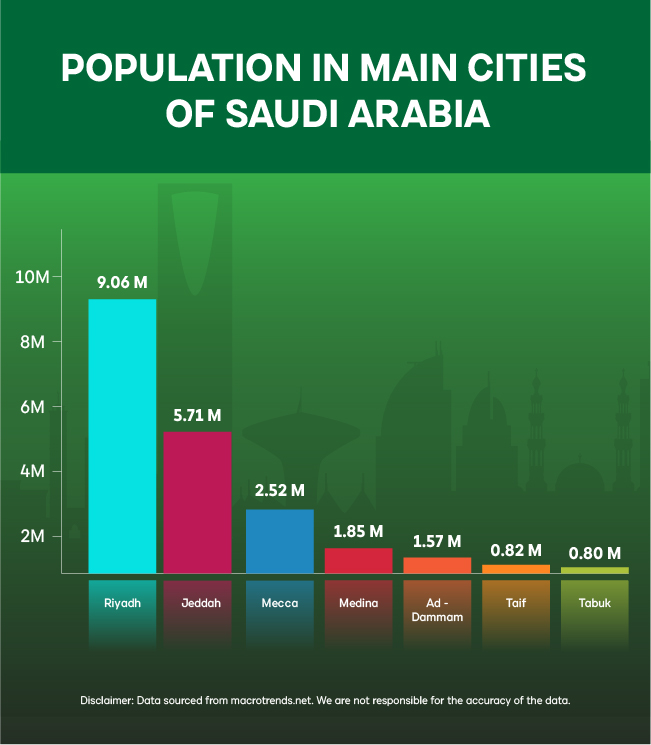
⚠️ Disclaimer: Data sourced from macrotrends.net. We are not responsible for the accuracy of the data.
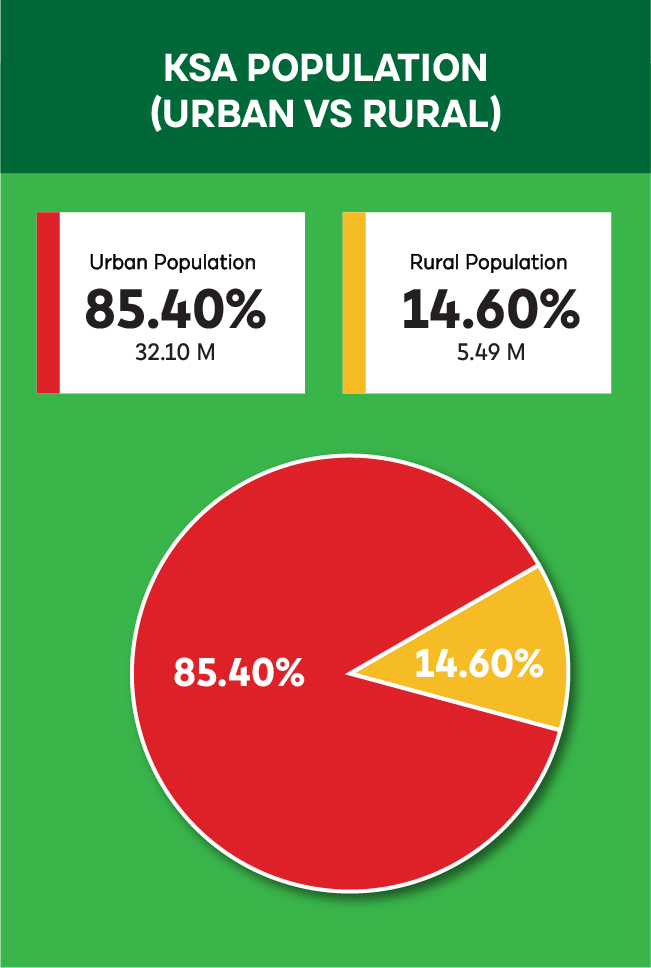
Saudi Arabia Population 2026 (Urban vs Rural)
Urban | 32.10 Million | 85.40% |
Rural | 5.49 Million | 14.60% |
The Urban Surge
With 32.10 million(85.4%) people now residing in major metropolitan areas, the Kingdom’s cities serve as the primary engines of economic transformation. Beyond just job opportunities, the appeal of “smart cities” and a sophisticated lifestyle—complete with world-class entertainment, retail, and digital services—continues to draw residents into the urban core.
The Rural Landscape
Conversely, the rural population stands at 14.60% (5.49 million people). The government is investing in localized industries and agritourism to ensure that rural communities remain economically viable and well-connected.
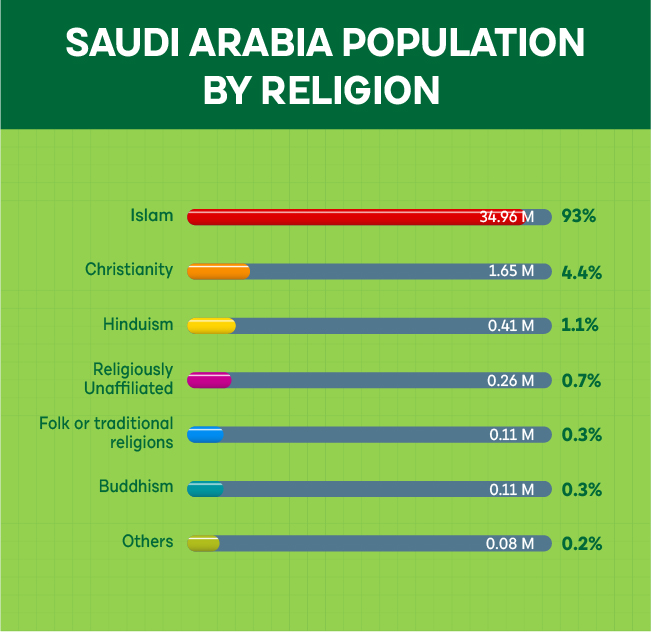
Saudi Arabia Population by Religion 2026
Religion | Percentage | Population (in Million) |
Islam | 93% | 34.96 M |
Christianity | 4.4% | 1.65 M |
Hinduism | 1.1% | 0.41 M |
Religiously Unaffiliated | 0.7% | 0.26 M |
Folk or traditional religions | 0.3% | 0.11 M |
Buddhism | 0.3% | 0.11 M |
Others | 0.2% | 0.08 M |
Saudi Arabia’s religious landscape is defined by its deep Islamic roots, while its status as a global economic crossroads continues to foster a diverse expatriate community.
The following breakdown illustrates the religious composition of the Kingdom based on 2026 data:
Islam (93.00% / 34.96 Million): As the cradle of Islam, the Kingdom’s social and legal frameworks are built upon Islamic traditions. The growth to nearly 35 million Muslims reflects both natural population increases and the Kingdom’s ongoing role as the spiritual center for the global Muslim community.
Christianity (4.40% / 1.65 Million): Representing the largest minority group, the Christian population is almost entirely composed of expatriate professionals. The stability of this percentage highlights the consistent demand for international talent in sectors like healthcare and specialized engineering.
Hinduism (1.10% / 0.41 Million): This community is primarily made up of workers from South Asia who contribute significantly to the Kingdom’s private sector and trade industries.
Other Faiths and Groups: The remaining population includes the Religiously Unaffiliated (0.70% / 0.26 Million), as well as those practicing Folk or Traditional Religions (0.30%/0.11Million), Buddhism (0.30%/0.11Million), and other diverse beliefs (0.20%/0.08Million).
Conclusion
The 2026 demographic data confirms that Saudi Arabia is experiencing a pivotal era of growth, characterized by a unique blend of natural expansion and strategic international migration.
With the total population now reaching 37.59 million, the Kingdom is successfully leveraging its “demographic dividend”—a vast, youthful workforce that is essential for the realization of Vision 2030.
The landscape is shifting in significant ways: the gender gap is narrowing as record numbers of women enter the private sector, and the expatriate community is evolving into a more settled, professional, and family-oriented demographic. Meanwhile, the rapid growth of urban centers like Riyadh and the strategic expansion of cities like Tabuk demonstrate a nation that is physically and economically reshaping itself to meet the demands of the future.
Understanding these shifts is key to grasping the trajectory of one of the world’s most dynamic economies. As Saudi Arabia continues to modernize while maintaining its deep-rooted cultural and religious identity, these population trends will remain the primary engine driving its social and economic transformation.
For a wider perspective, our detailed GCC population statistics provide valuable insights into how Saudi Arabia’s trends compare within the region.
⚠️ Disclaimer & Note: This content is for general informational purposes only. We are not responsible for any errors, financial loss, or damages that may result from its use or reliance. Please verify the information with official sources as needed. Also, please note that population figures may vary slightly as they are updated from multiple sources.
Now, let’s look at the KSA population statistics 2025 data
Saudi Arabia Population Statistics 2025 [Infographics]

Saudi Arabia’s Demographics in 2025
Saudi Arabia is home to a diverse and growing population.
The next sections explore key demographic factors shaping the country.
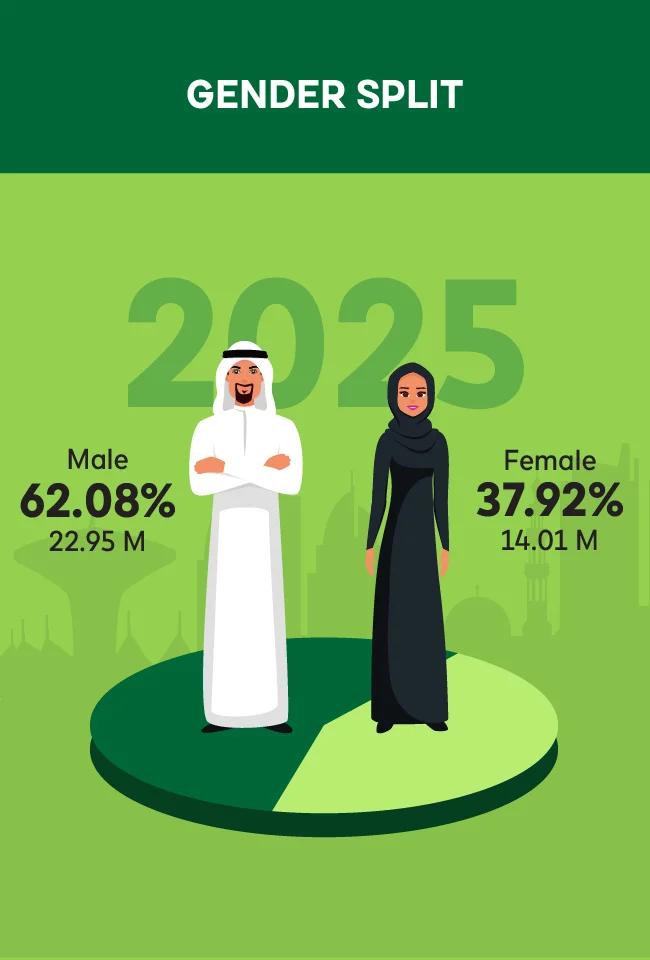
Gender Distribution
Gender | Population | Population (%) |
Male | 22.95 Million | 62.08% |
Female | 14.01 Million | 37.92% |
Saudi Arabia’s population remains male-dominated, with 62.08% men (22.95 million) and 37.92% women (14.01 million).
While the gender gap is gradually narrowing, there is still a noticeable difference between the number of men and women.
This trend has historically been shaped by cultural norms and economic factors, including the large number of male expatriates working in key industries.
However, the Saudi government is actively working to empower women through initiatives that encourage higher university enrollment and workforce participation.
These efforts are slowly shifting the gender balance and contributing to the Kingdom’s broader modernization goals.
As more women enter the workforce, these changes could have a significant impact on society and the economy in the coming years.
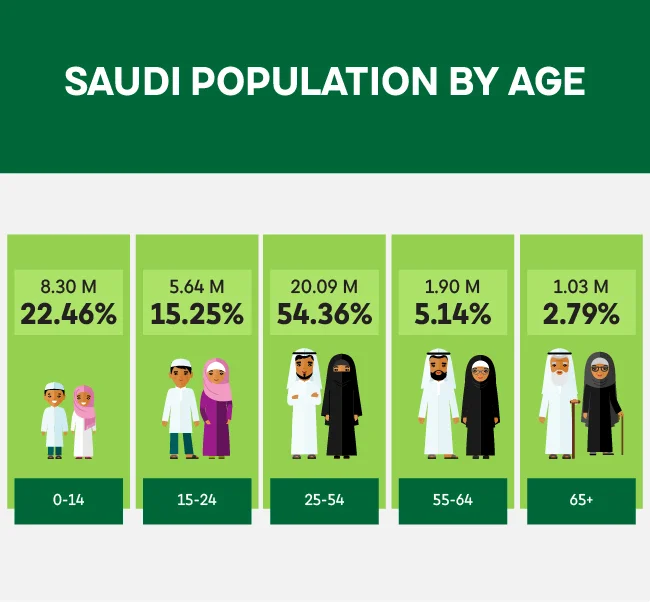
Saudi Arabia Population by Age (2025)
Age Group | Population | Population (%) |
0-14 years | 8.30 Million | 22.46% |
15-24 years | 5.64 Million | 15.25% |
25-54 years | 20.09 Million | 54.36% |
55-64 years | 1.90 Million | 5.14% |
65 years and above | 1.03 Million | 2.79% |
✨ The largest age group is 25-54 years, making up 54.36% (20.09 million people). This indicates a strong working-age population that drives the economy.
👶 The second-largest group is children (0-14 years) at 22.46% (8.30 million people), highlighting a young and growing demographic.
🧑🎓 Young adults (15-24 years) make up 15.25% (5.64 million people), representing the future workforce.
🔴 The population declines significantly in older age groups.
Ages 55-64 account for 5.14% (1.90 million people)
Seniors (65+ years) make up just 2.79% (1.03 million people)
This distribution suggests that Saudi Arabia has a youthful population, which could shape its economy, labor market, and social policies in the coming years.
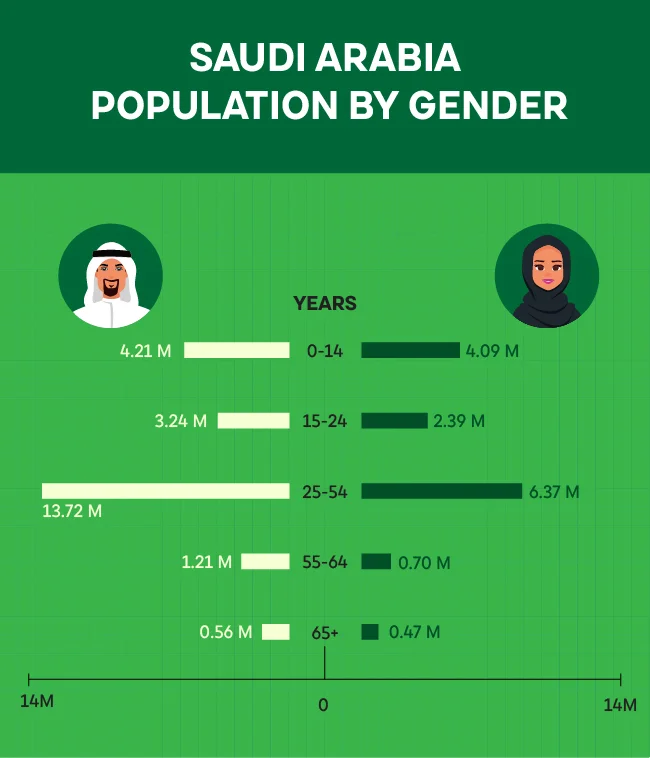
Saudi Arabia’s Population by Gender (2025)
Age Group | Men | Women |
0-14 years | 4.21 Million | 4.09 Million |
15-24 years | 3.24 Million | 2.39 Million |
25-54 years | 13.72 Million | 6.37 Million |
55-64 years | 1.21 Million | 0.70 Million |
65 years and above | 0.56 Million | 0.47 Million |
✨ The 25-54 age group has the highest population, with 13.72 million men and 6.37 million women, indicating a strong working-age population. The higher number of men is likely due to labor migration in key industries.
👶 Among children (0-14 years), the numbers are almost equal, with 4.21 million boys and 4.09 million girls. This suggests a stable birth rate across genders.
🧑🎓 In the 15-24 age group, there are more men (3.24 million) than women (2.39 million). This could be due to higher education or employment opportunities available to young men.
🔴 The 55-64 age group sees a decline in population, with 1.21 million men and 0.70 million women. The gender gap remains, but both numbers decrease as people approach retirement age.
💔 The 65+ age group has the lowest population, with 0.56 million men and 0.47 million women. The narrowing gender gap here suggests that women may have a slightly higher life expectancy than men in Saudi Arabia.
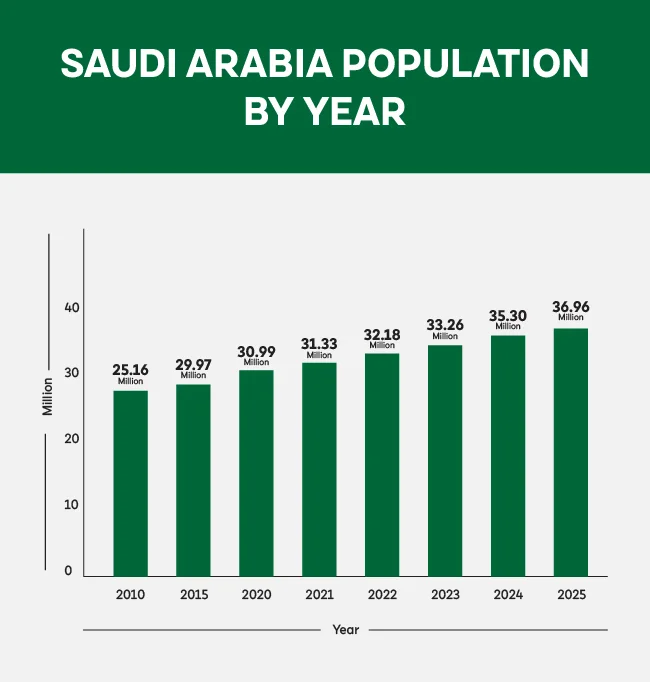
Saudi Arabia’s Population by Year (2010 – 2025)
Year | Population |
2025 | 36.96 Million |
2024 | 35.50 Million |
2023 | 33.26 Million |
2022 | 32.18 Million |
2021 | 31.33 Million |
2020 | 30.99 Million |
2015 | 29.97 Million |
2010 | 25.16 Million |
Saudi Arabia’s population has been steadily growing over the years, reaching 36.96 million in 2025.
Between 2020 and 2025, the country added nearly 6 million people, reflecting significant growth.
The most noticeable increase happened between 2023 and 2025, when the population jumped by 3.7 million in just two years.
Looking back further, since 2015 (29.97 million), the population has grown by almost 7 million in a decade.
Historically, Saudi Arabia saw rapid population growth in the second half of the 20th century, thanks to improved healthcare and better living conditions.
A declining death rate and higher life expectancy played a major role in this rise.
According to United Nations projections, the population will continue to grow, though at a slower pace in the coming years.
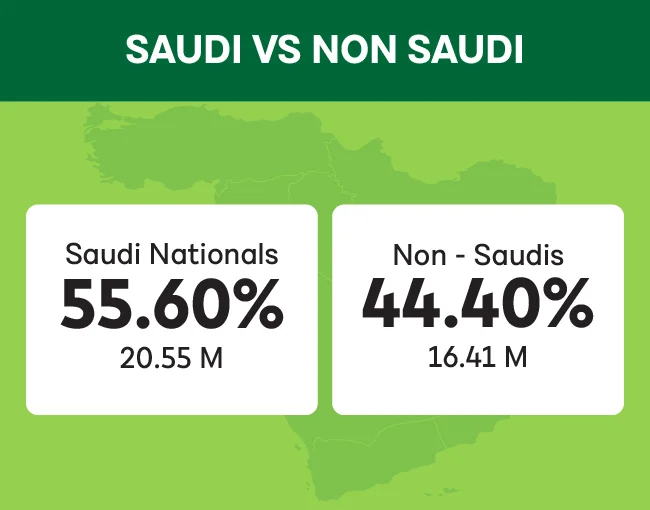
Saudi vs. Non-Saudi Population in Saudi Arabia 2025
Nationality | Percentage | Population |
Saudi Nationals | 55.6% | 20.55 Million |
Non-Saudis | 44.4% | 16.41 Million |
According to research by the GMI Team, Saudi Arabia’s population consists of both nationals and expatriates, reflecting its economic strength and international workforce.
✅ Saudi nationals account for 55.6% (20.55 million people), primarily engaged in government, business, and public services.
🌍 Non-Saudis, making up 44.4% (16.41 million people), are mainly foreign workers contributing to sectors like construction, healthcare, retail, and IT.
The significant presence of expatriates highlights Saudi Arabia’s role as a global economic hub, while initiatives like “Saudization” (Nitaqat) focus on boosting local employment.
This blend of locals and expatriates plays a crucial role in shaping the country’s workforce diversity and economic growth.
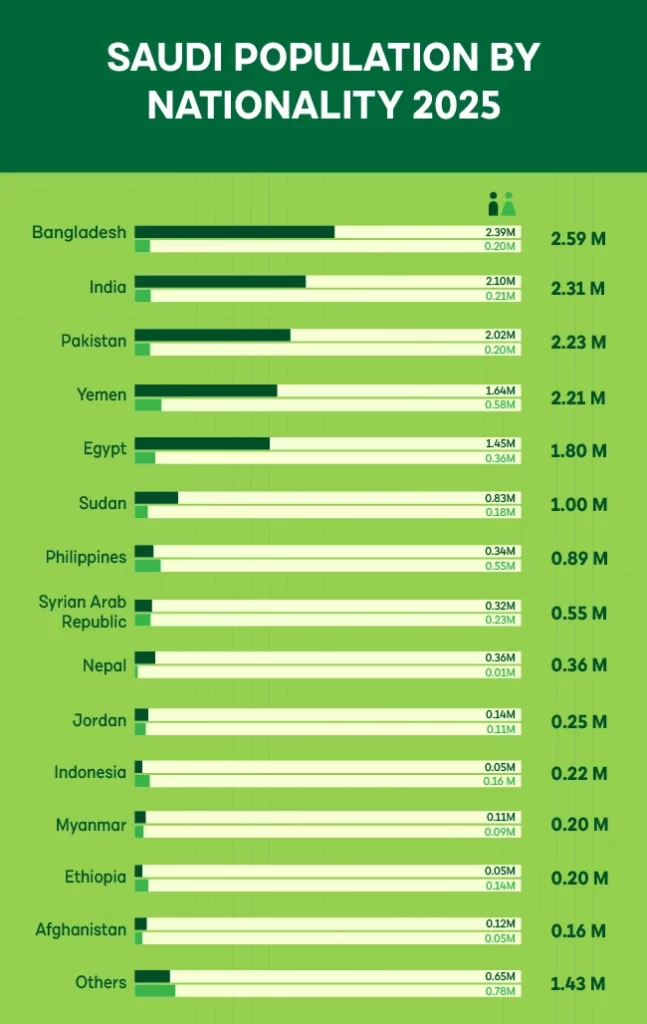
Saudi Population by Nationality 2025
Nationality | Male Population (In Million) | Female Population (In Million) | Total Population (In Million) |
|---|---|---|---|
Bangladesh | 2.39 | 0.20 | 2.59 |
India | 2.10 | 0.21 | 2.31 |
Pakistan | 2.02 | 0.20 | 2.23 |
Yemen | 1.64 | 0.58 | 2.21 |
Egypt | 1.45 | 0.36 | 1.80 |
Sudan | 0.83 | 0.18 | 1.00 |
Philippines | 0.34 | 0.55 | 0.89 |
Syrian Arab Republic | 0.32 | 0.23 | 0.55 |
Nepal | 0.36 | 0.01 | 0.36 |
Jordan | 0.14 | 0.11 | 0.25 |
Indonesia | 0.05 | 0.16 | 0.22 |
Myanmar | 0.11 | 0.09 | 0.20 |
Ethiopia | 0.05 | 0.14 | 0.20 |
Afghanistan | 0.12 | 0.05 | 0.16 |
Others | 0.65 | 0.78 | 1.43 |
The GMI Team has analyzed the expatriate population in Saudi Arabia, revealing a diverse workforce contributing to the country’s economic growth.
✔ Bangladesh tops the list with 2.59 million expats, the majority (2.39 million) being men, reflecting strong labor migration.
✔ India follows with 2.31 million people, again dominated by male workers, primarily in construction, healthcare, and trade.
✔ Pakistan has 2.23 million expats, contributing significantly to various industries across the kingdom.
⭐ Yemen’s 2.21 million expats include a relatively higher number of female workers than other nationalities.
⭐ Egypt (1.80 million) and Sudan (1.00 million) play vital roles in professional sectors like education and healthcare.
⭐ The Philippines has 0.89 million expats, with more women than men, largely working in domestic and medical services.
⭐ Other communities, including Syrians, Nepalis, Jordanians, Indonesians, Ethiopians, and Afghans, form smaller but essential segments of the workforce.
This data highlights Saudi Arabia’s status as a key global employment hub, attracting workers from Asia, the Middle East, and Africa.
These expatriates continue to drive growth in construction, trade, and service industries, reinforcing their crucial role in the kingdom’s economic landscape.
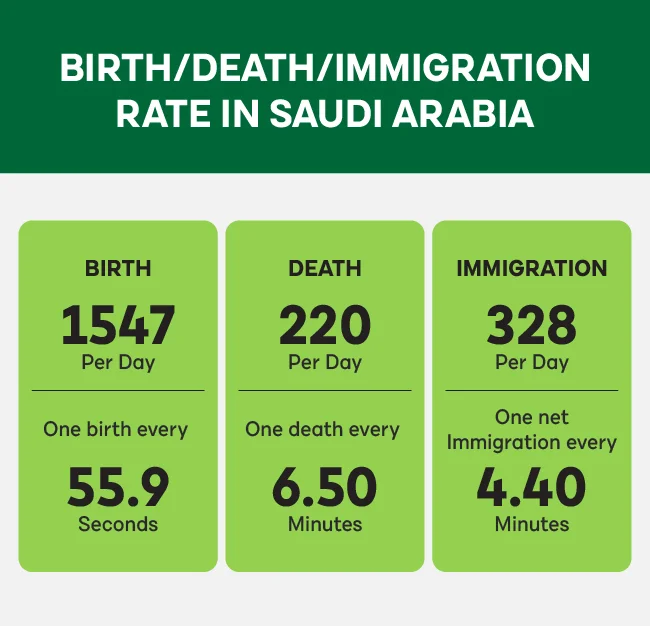
Saudi Arabia Birth Rate, Death Rate & Immigration Rate 2025
Births | 1547/Day | 55.9 Seconds |
Deaths | 220/Day | 6.50 Minutes |
Immigrations | 328/Day | 4.40 Minutes |
Saudi Arabia records 1,547 births per day, which means there is a birth every 55.9 seconds.
The high number of births aligns with a youthful population and relatively high fertility rates.
Improved healthcare and living standards contribute to a lower daily death rate of 220, allowing more people to reach an older age.
Meanwhile, strong economic opportunities in urban centers, driven by oil revenues and rapid infrastructure development, attract around 328 immigrants each day.
Together, these factors explain Saudi Arabia’s dynamic population growth.
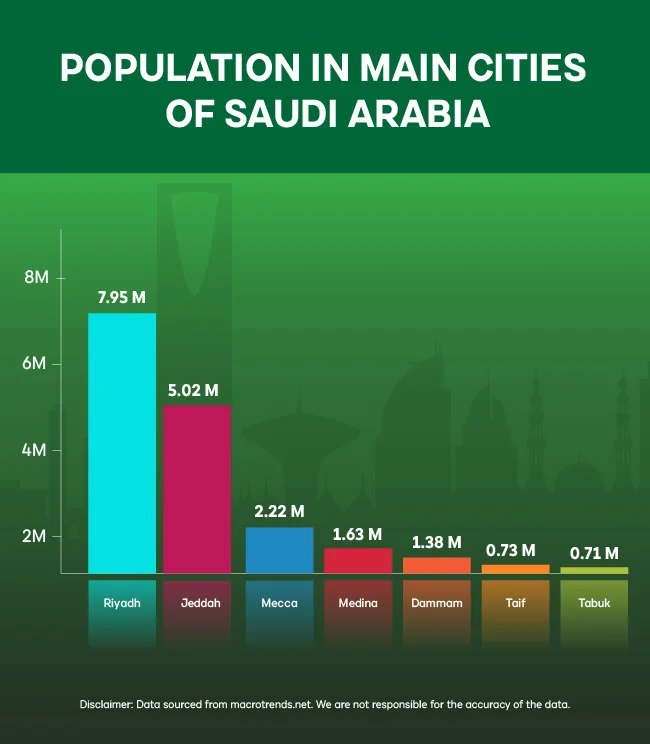
Population in Main Cities of Saudi Arabia 2025
City | Population |
Riyadh | 7.95 Million |
Jeddah | 5.02 Million |
Mecca | 2.22 Million |
Medina | 1.63 Million |
Ad-Dammam | 1.38 Million |
Taif | 0.73 Million |
Tabuk | 0.71 Million |
Riyadh, the capital and administrative center of Saudi Arabia, is home to 7.95 million people. Its population growth is fueled by booming business, government institutions, and rapid urban development.
Jeddah, with 5.02 million residents, is a major port city on the Red Sea. Its strategic location supports trade and tourism, making it a key economic hub.
Mecca, housing 2.22 million people, is the holiest city in Islam. It attracts millions of visitors each year, contributing to a stable local population.
Medina, with 1.63 million residents, is revered for its Islamic heritage. It draws both pilgrims and permanent residents, thanks to its religious significance.
Ad-Dammam, home to 1.38 million people, is a major hub for the oil industry and commerce, playing a crucial role in the country’s economy.
Taif, with a population of 0.73 million, is known for its cooler climate and agricultural production, making it a unique destination in Saudi Arabia.
Tabuk, with 0.71 million residents, holds historical and strategic importance. It serves as a gateway to northwestern Saudi Arabia and is vital for regional development.
⚠️ Disclaimer: Data sourced from macrotrends.net. We are not responsible for the accuracy of the data.
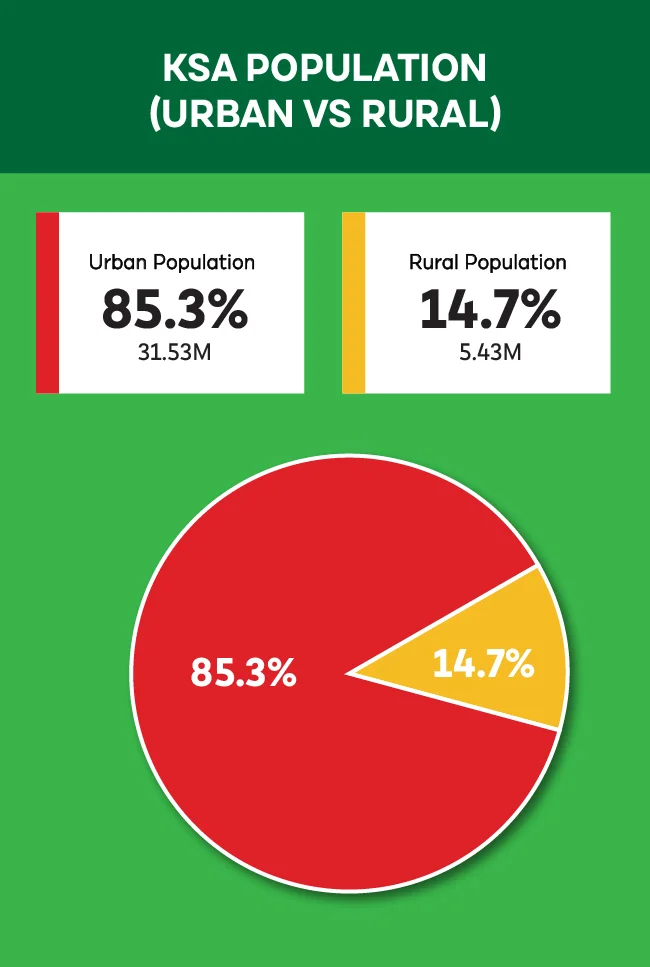
Saudi Arabia Population 2025 (Urban vs Rural)
Urban | 31.53 Million | 85.30% |
Rural | 5.43 Million | 14.70% |
Saudi Arabia’s population is predominantly urban, with 85.3% (31.53 million people) living in cities. This shift is largely due to better job opportunities, modern infrastructure, and improved quality of life found in urban areas.
In contrast, only 14.7% (5.43 million people) reside in rural areas. This significant gap highlights how economic growth and development have been concentrated in cities, making them more attractive for residents seeking prosperity and modern amenities.
Saudi Arabia Population by Religion 2025
Religion | Percentage | Population (in Million) |
Islam | 93% | 34.37 M |
Christianity | 4.4% | 1.63 M |
Hinduism | 1.1% | 0.41 M |
Religiously Unaffiliated | 0.7% | 0.26 M |
Folk or traditional religions | 0.3% | 0.11 M |
Buddhism | 0.3% | 0.11 M |
Others | 0.2% | 0.07 M |
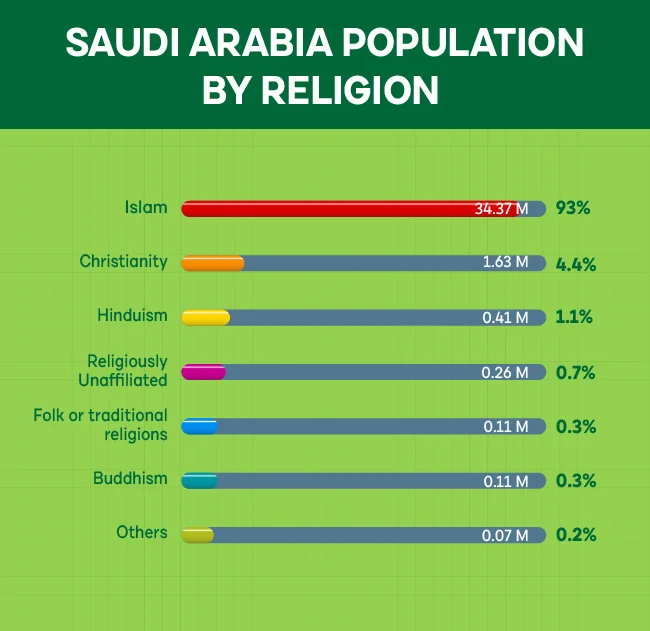
Islam is the dominant religion in Saudi Arabia, with 93% of the population (34.37 million people) identifying as Muslim. This strong majority underscores the deep influence of Islamic traditions and values in the country’s culture, laws, and daily life.
Christianity is the second-largest religion, making up 4.4% (1.63 million people). This reflects a small but notable Christian community, primarily consisting of expatriates.
Hinduism accounts for 1.1% (0.41 million people), followed by the religiously unaffiliated (0.7%), and smaller groups practicing folk religions, Buddhism, and other faiths.
While Islamic traditions shape the nation, the presence of diverse minority communities contributes to Saudi Arabia’s cultural landscape, reflecting its role as a global economic hub with a significant expatriate population.
Conclusion
Saudi Arabia’s population growth is a testament to its economic strength, cultural heritage, and ongoing modernization.
With a young and largely urban population, the country is evolving while staying true to its traditions.
The gender gap is gradually closing as more women enter the workforce, and urbanization continues to shape daily life.
As the Kingdom pushes forward with Vision 2030, these demographic shifts will play a key role in shaping its future.
Keeping an eye on these changes helps us better understand Saudi Arabia’s social and economic journey.
For a wider perspective, our detailed GCC population statistics provide valuable insights into how Saudi Arabia’s trends compare within the region.
⚠️ Disclaimer & Note: This content is for general informational purposes only. We are not responsible for any errors, financial loss, or damages that may result from its use or reliance. Please verify the information with official sources as needed. Also, please note that population figures may vary slightly as they are updated from multiple sources.
Now, let’s look at the KSA population statistics 2022 census data
Saudi Population Government Census – Key Statistics
According to the 2022 census, the total population of KSA is 32.12 million.
The median age is 29 years.
The fertility rate is 2.8.
The Saudi dependency ratio is 62.
Of the total population, 58.4% are Saudis, while 41.6% are non-Saudis.
Males make up 61.2% of the population, while females make up 38.8% of the population.
The average household size of Saudis is 4.8, while the average household size of non-Saudis is 2.7.
Indian population in Saudi Arabia 2023 is 1.88 Million according to 2022 Saudi census.
Now, let us examine the some of the important findings from the KSA 2022 Census in detail:
Saudi Population Government Census – Infographics

Gender Split
| Gender | Population | Percentage |
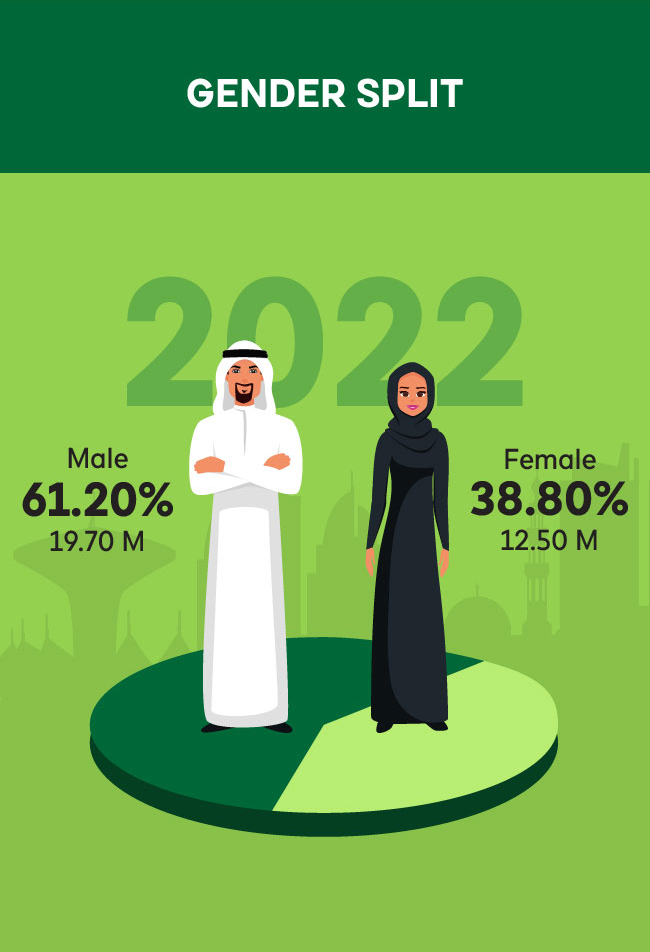
| Male | 19.70 Million | 61.20% |
| Female | 12.50 Million | 38.80% |
There is a clear gender disparity in the population, with males outnumbering females. There are 19.70 million males compared to 12.50 million females in Saudi Arabia.
However, Saudi Arabia is actively taking proactive steps to bridge this gap, including Vision 2030, which focuses on providing more socio-economic opportunities to women. Till now, the initiatives have resulted in the following opportunities for females: the right to drive and obtain passports, jobs in the military and armed forces, giving them the right to property, etc. These decisions reflect the nation’s commitment to creating a more inclusive society.
Nationality Split
| Nationality | Population | Percentage |
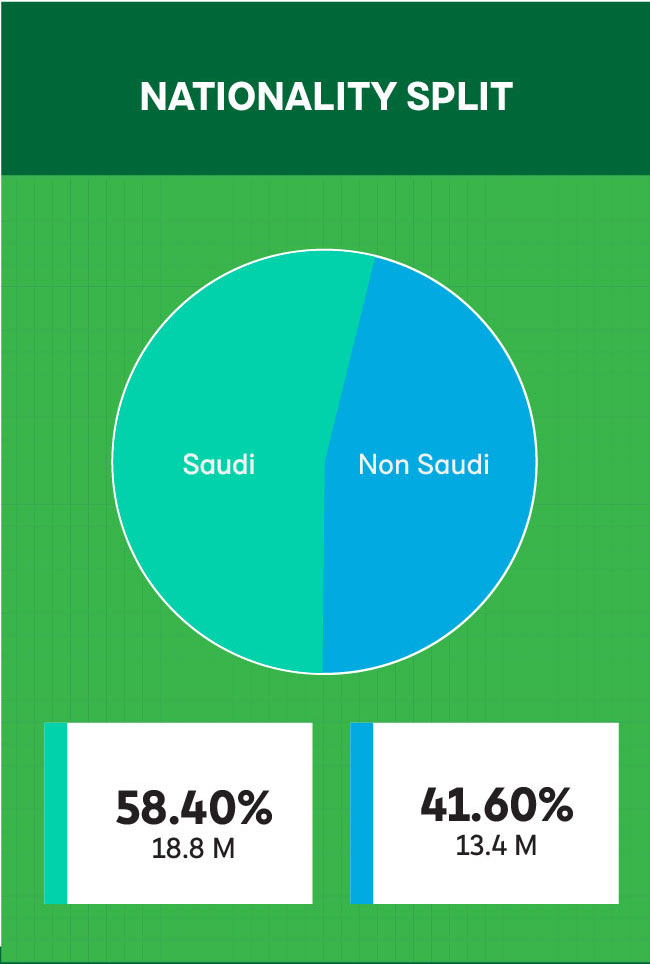
| Saudi | 18.80 Million | 58.40% |
| Non Saudi | 13.40 Million | 41.60% |
When it comes to the nationality split, Saudi nationals dominate the country with a total of 18.8 million, while non-Saudis account for only 13.4 million of the total population.
This can be attributed to the fact that Saudis have excellent opportunities within the country, thanks to Nitaqat or Saudization programmes. In addition, the Saudis also receive many economic incentives, including healthcare, housing, education, etc.
All of this significantly helps KSA retain its nationals, even though many sectors such as construction, healthcare, etc., rely on migrant workers.
Saudi Population by Age
| Age Group | Population | Percentage |
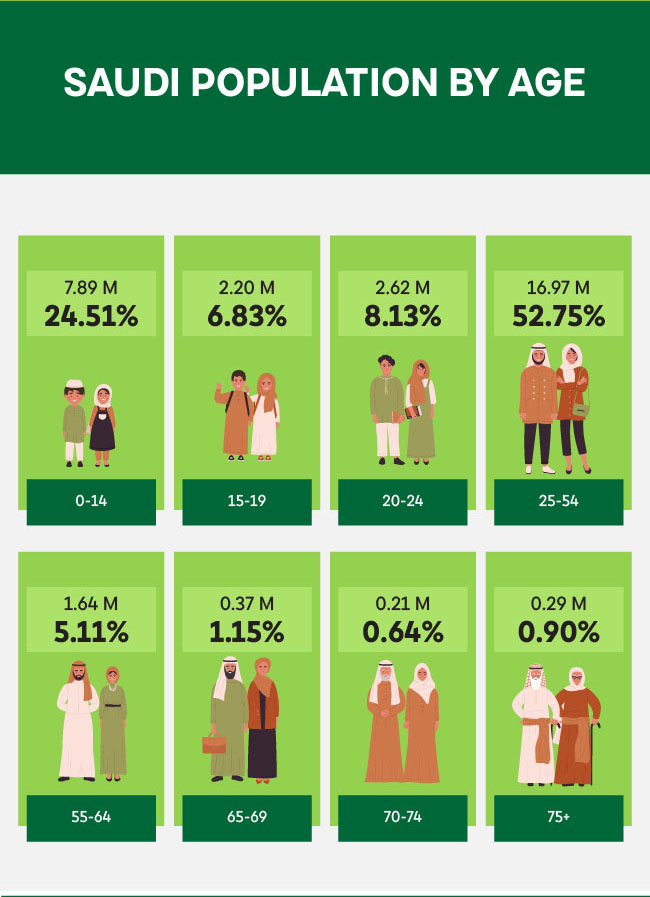
| 0-14 Years | 7.89 Million | 24.51% |
| 15-19 Years | 2.20 Million | 6.83% |
| 20-24 Years | 2.62 Million | 8.13% |
| 25-54 Years | 16.97 Million | 52.75% |
| 55-64 Years | 1.64 Million | 5.11% |
| 65-69 Years | 0.37 Million | 1.15% |
| 70-74 Years | 0.21 Million | 0.64% |
| 75+ Years | 0.29 Million | 0.90% |
When we examine the age-wise demographics of the KSA population, the age group 25-54 years constitute the majority. They account for 16.97 million or 52.75% of the population. This is the prime working age population of KSA, or the driving force of the KSA economy.
On the other hand, the lowest percentage of people is found in the 70-74 age group, comprising 0.21 million people or 0.64% of the total population.
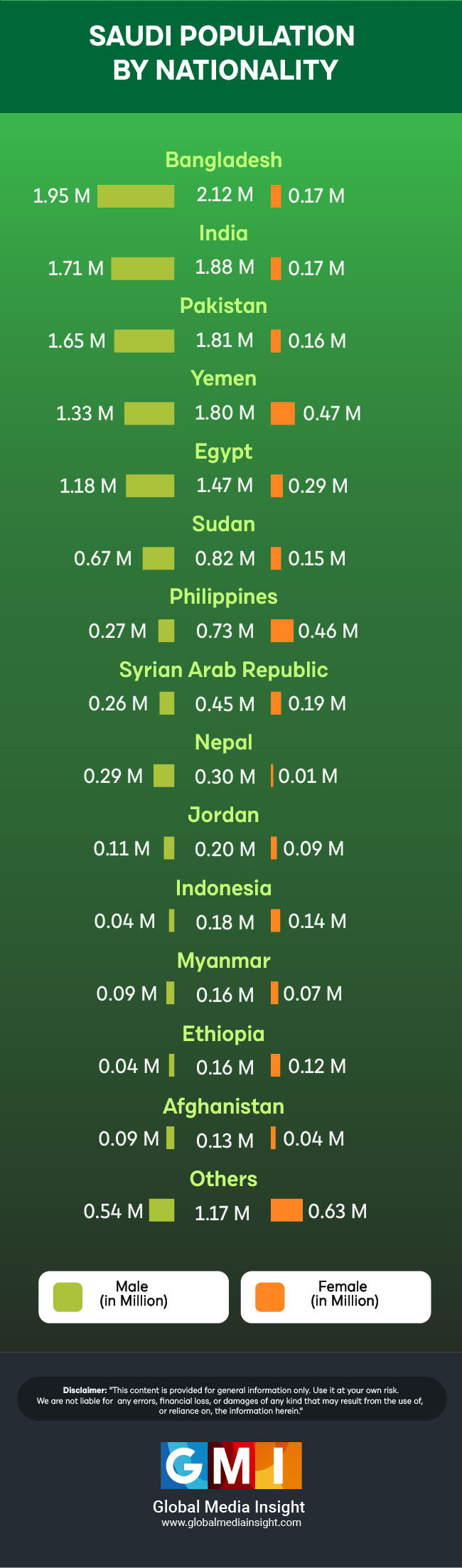
Saudi Population By Nationality
| Nationality | Population | Male | Female |
| Bangladesh | 2.12 Million | 1.95 Million | 0.17 Million |
| India | 1.88 Million | 1.71 Million | 0.17 Million |
| Pakistan | 1.81 Million | 1.65 Million | 0.16 Million |
| Yemen | 1.80 Million | 1.33 Million | 0.47 Million |
| Egypt | 1.47 Million | 1.18 Million | 0.29 Million |
| Sudan | 0.82 Million | 0.67 Million | 0.15 Million |
| Philippines | 0.73 Million | 0.27 Million | 0.46 Million |
| Syrian Arab Republic | 0.45 Million | 0.26 Million | 0.19 Million |
| Nepal | 0.30 Million | 0.29 Million | 0.01 Million |
| Jordan | 0.20 Million | 0.11 Million | 0.09 Million |
| Indonesia | 0.18 Million | 0.05 Million | 0.13 Million |
| Myanmar | 0.16 Million | 0.09 Million | 0.07 Million |
| Ethiopia | 0.16 Million | 0.04 Million | 0.12 Million |
| Afghanistan | 0.13 Million | 0.09 Million | 0.04 Million |
| Others | 1.17 Million | 0.53 Million | 0.64 Million |
According to the latest KSA census report released in May 2023, out of the total expat population of 41.6%, Bangladeshi nationals occupy the first position with 2.12 million people. Of these, 1.95 million are males and 0.17 million are females. The second position is occupied by Indians, with 1.88 million in which 1.71 million are males and 0.17 million are females. The third position is occupied by Pakistani nations with 1.81 million,where 1.65 million are males and 0.16 million are females.
Saudi Population Forecasts/Predictions
Based on births, deaths, and migrations, the KSA’s population increases by one person every 59 seconds. And according to some sources, the population of the country is expected to reach 39.93 million by 2027.
Saudi Arabia is in its early stages of social and economic development. Many societal changes including issuing driving rights to women and opening the borders to tourists other than Haj pilgrims show that the country is expanding its horizons. This can bring about a change in the country’s demographics and the overall population in the coming years.
To get your brands message to your clients in Saudi Arabia or abroad get in touch with Global Media Insight today. We have over 24 years of experience in digital technologies and social media and digital markets along with expertise on the latest tools to drive engagement to increase your business brand value and customer loyalty. Talk to us to discover social media strategies that work across platforms and channels.
Disclaimer: GMI acknowledges that though we try to report accurately, we cannot verify the absolute facts of everything that has been presented in this blog. The information presented is based on information researched from various sources on the internet. We are not liable for any errors, financial loss, or damages of any kind that may result from the use of, or reliance on, the information herein.